The British campaign against New York in 1776 demonstrated a prime example of missed opportunity on the part of the British, and arguably, was the key campaign of the war. The British were in a position to capture a major American city, as well as to destroy the American Army and its commander General George Washington. In accomplishing all three of these possibilities, the American Revolution may well have ended in defeat for the Americans in the fall of 1776. During the campaign, the British conducted a skillful and successful plan of action, yet they failed to prosecute that plan with the aggressiveness that would have ensured a relatively quick and decisive victory. These mistakes come in many forms and today, historians and students alike continue to debate the reasons for the British failure.
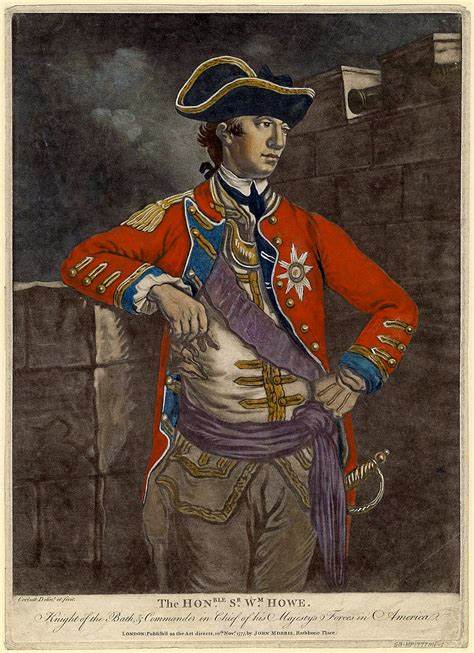
The British certainly made numerous tactical errors during the campaign and these errors, coupled with British General William Howe’s indecisiveness, led to the less than spectacular results of the campaign for the British. While the aforementioned British blunders were likely the main reasons the Americans escaped the campaign intact, some would argue that it was the leadership of George Washington that allowed the Americans to conduct a successful strategic withdrawal. The facts of the campaign, however, tend to demonstrate that Washington simply took advantage of British indecisiveness and errors. To re-examine the campaign, and highlight the missed opportunities and outright errors of the British command leadership, the layout of the following article is in the format of a strategic analysis.
Operational and/or Strategic Setting:
The British campaign to capture New York City came about initially from a British desire to engage the American army in a decisive battle that would win the war for Great Britain. Upon the ascension of Lord George Germain as the Secretary of State for the American colonies, the British government sought a military solution to the rebellion in America.[i] Germain believed that the way to end the rebellion was to win a decisive victory over the Americans, and then to dictate terms of peace from a position of strength.[ii]
To accomplish this end, the British adopted the standard European approach that in order to win a war, securing key positions such as large cities was essential.[iii] This stemmed from the belief that by taking an enemy’s center of power, the enemy’s resistance would collapse, unfortunately for the British; they never realized there was no such center of power in the American Colonies.[iv] The British, however, never realized this fact, and therefore, they continued to seek an elusive decisive victory. To this end, the British selected New York City as the key colonial center of power and attempted to force the American army into a decisive campaign.
New York was an important city, both politically and strategically due to its location at the mouth of the Hudson River. The Hudson River was a valuable means of supply to Canada, and acted as a natural barrier that if controlled by the British, would cut off the more rebellious New England colonies.[v] Once the New England colonies were isolated, the British could deal with them before turning south to subdue the remainder of her possessions in America. The Americans, however, also knew of the importance of New York City, and they moved to defend it as the British hoped. The decisive campaign that the British desired had come.
The American Congress and General George Washington both recognized the strategic position of New York City for the same reasons as the British. The city controlled the mouth of the Hudson River and could act as a staging point for naval actions to the north and the south.[vi] While some, including, Charles Lee, the man assigned to set up the city’s defenses, viewed the position as indefensible due to the numerous waterways that granted a decided advantage to the British, Congress ordered the city defended.[vii] Washington, however, knew the city itself would be difficult to hold, particularly if the loyalists aided the British. In a letter to Joseph Reed, Washington stated, “I inform’d you of my sending Genl Lee to New York…to secure the Tories of Long Island…and to prevent, if possible, the Kings Troops from making a Lodgment there.”[viii] Washington’s “if possible”, underscores the defensive plan for New York City.
George Washington was no seeking a victory over the British; he was seeking a costly defeat, costly for the British. What the Americans planned, was not so much to defend the city, but rather to make the taking of it so exorbitant, the British would give up the effort to subdue the colonies.[ix] The British, however, sought to secure a center of power and influence, aid the large loyalist faction in the area, while destroying the American army; and the Americans wished to turn New York into another Bunker Hill. Bunker Hill was a victory that cost the British dearly, prompting General Henry Clinton to pen n his memoirs, “a few more such victories would have shortly put an end to British dominion in America.”[x] The Americans hoped to repeat the events of Bunker Hill and give the British a victory so costly that they would abandon their efforts all together. As events unfolded, however, neither the Americans nor the British would meet their goals, and ironically perhaps, for the same reasons.
Types of Forces Involved:
The two forces that met at New York were markedly different. The British fielded not only a professional army and navy, but also the largest force they had ever sent to a foreign shore.[xi] When all of the various British elements arrived, the British force numbered thirty-two thousand soldiers, ten thousand sailors, and two thousand marines.[xii] Ten ships of the line and twenty frigates supported this force, more than enough to control the waters around Long Island and Manhattan.[xiii] Also with this force were over twelve hundred pieces of artillery, making the British force the largest they would ever field until their great armies of the First and Second World Wars.[xiv]
The soldiers that made up the British army were veterans of numerous battles, and they included a contingent of highly disciplined and experienced German soldiers. The British force comprised light and heavy infantry, artillery, and cavalry. Amongst the British sailors were veterans with years of naval service, as well as recent recruits.[xv] The Americans fielded a very different army and no navy to speak of other than some fire ships, which attempted, and failed, to sink the HMS Phoenix.[xvi]
The American Army consisted of around ten thousand Continentals, who had seen some service, and fourteen thousand militia that Congress ordered to join Washington at New York.[xvii] Washington, however, inexplicitly elected to forgo the use of four hundred Connecticut cavalry, a decision that would result in later disaster on Long Island.[xviii] Along with the infantry, however, the Americans did possess artillery that strengthened their defensive positions. These defensive positions, which were designed and established by Major General Charles Lee upon his arrival in February 1776, enabled the Americans to contemplate holding the city against the might of the British military arrayed against them.
The defenses established by Lee included fortifications on Manhattan and Long Island, particularly the Brooklyn Heights, in an effort to force the British to forgo Long Island and strike at Manhattan Island where the Americans could utilize the city and the hilly terrain to inflict heavy casualties on the British forces.[xix] This plan, if realized, would fulfill Washington’s idea of making New York another Bunker Hill, a costly affair for the British, thus Washington approved the plan. Other men, however, opposed this plan and offered alternatives.
One alternative, proposed by John Holt, a printer, suggested that in an effort to reduce the effectiveness of the Royal Navy, forts and floating batteries be constructed near the narrows of Hell’s Gate between Staten Island and Long Island, as well as placing floats to obstruct ship passage.[xx] Even the Continental Congress’ idea of fortifying both sides of the narrows on Staten and Long Island was disregarded by Lee and Washington.[xxi] These two plans, both of which would have created difficulty for the British, were disregarded in favor of Washington, and Lee’s, plan of attrition. Make the British victory so costly they would begin to lose support for the war effort.
This pre-occupation with inflicting heavy casualties on the British while losing battles and territory heavily influenced the decision making of Washington and some of his subordinates. Taking the defensive is certainly a logical move on Washington’s part, but had he taken some of the advice of others, the Americans may well have fared better against the British. A cursory glance at these two forces demonstrates the overwhelming superiority of the British attackers, and it was not just superior in experienced men, ships and artillery, but also in weapons technology.
Both the Americans and the British utilized similar, but not exact weaponry, for example, both carried muskets that were old and in some cases, defective, although the British muskets were newer than the Americans firearms.[xxii] Many times, Americans would cast aside their own weapon and pick up a discarded British firelock musket.[xxiii] At the time of the Battle of New York, French military aid to the Americans was not abundant, as it would soon become. The Americans still relied on their own antiquated weapons and weapons they acquired from the British in the form of discarded rifles, in addition to some French muskets, although it would not be until 1777 that large quantities of French weapons arrived.[xxiv] The disparity in weapon technology would soon become evident. When the British launched their assault on the American defenses on Long Island, they possessed not only a numerical superiority of two to one, but they also possessed superior weapons and training. [xxv]
Chronology:
American preparations for the defense of New York City began early in 1776 with the arrival of Major General Lee and a group of Connecticut volunteers, and Lee immediately went about organizing the defensive arrangements mentioned above.[xxvi] The actual battle, however, did not begin until General William Howe received all of the troops and supplies at his command. Howe staged his force on Staten Island, the very area that some advised Lee and Washington to secure, likewise, the British had free access through the narrows as Lee focused his defensive arrangements on Long Island and around New York City. Once Howe felt the British force gathering on Staten Island was prepared, he began the first phase of the campaign with landings on Long Island on the morning of 22 August 1776. The British landing, covered by the Royal Navy, met no opposition as the Americans stayed within their prepared defenses.[xxvii] The British landing took only three hours to complete and utilized a unique type of landing craft. The landing craft, built on Staten Island, featured a bow that dropped down to create a ramp; a very similar craft famously saw action in the D-Day landings in June 1944 during the Second World War.[xxviii]
Following their successful landing, the British then spent the next few days preparing their forces for the coming battle, placing a force on the American right wing and center, while a third under General Henry Clinton and General Charles Cornwallis attempted a flanking movement through the Jamaica Pass and down the Jamaica road. The flanking movement represented the one time Howe would take advice from a subordinate as to the prosecution of the campaign. The plan, devised by General Clinton, was originally rejected by Howe as being too risky as it called for a night march through unknown territory, but after Howe became assured that local guides could assist the British in the daring night movement, he consented to the plan.[xxix]
On the night of 26 August, the British began the flanking movement around the unprotected left of the American line. Interestingly, the Americans anticipated the British utilizing the Jamaica Road, but only had it guarded by a group of five officers, which the British slipped behind by cutting cross country and not using the road itself.[xxx] Upon interrogating these officers and finding the pass undefended, the British occupied the pass the following morning and the road was clear enfilade the American defenses on Gowanus Heights.[xxxi]
While Cornwallis made the flanking movement, General James Grant and Prussian General Philip von Heister kept the Americans pinned to their defenses with attacks designed not to overrun, but to hold the Americans in place.[xxxii] The British move, however, touched off a panic in the Americans when the British captured half of Colonel Samuel Miles’ command and those that escaped the British fled back to the American fortifications, which caused other American units to also retreat to the fortifications.[xxxiii] Once the British completed the flanking movement, the Americans found themselves trapped. In the early hours of 27 August, with many Americans fleeing before them, the British suddenly appeared in their rear and while some of the defenders put up a spirited defense, the majority either attempted to surrender or retreated back to the fortifications on Brooklyn Heights.[xxxiv] These actions began the largest battle of the Revolutionary War, and the Americans, taken by surprise, were in full retreat.
As the left wing of the American defense collapsed, the German forces under von Heister engaged the center. While the Hessians design was to hold the Americans in place for the trap to close, the Americans began a retreat. This came about as they engaged the Germans to their front, heard the arrival of the British troops under Howe to their rear following the rolling up of the left flank, and witnessed many of the defenders already retreating.[xxxv] The American center soon collapsed and by eleven in the morning, only the right wing of the American line still held out.[xxxvi] This force, commanded by General William Stirling quickly found itself surrounded by Grant to their front, von Heister to their left, and Cornwallis to their rear. Stirling ordered a withdrawal and taking two hundred fifty men, fought a rear guard action that allowed the bulk of the Americans on the right wing to escape.[xxxvii] At this point, with the American on the verge of a full retreat and possible rout, British leadership failed.
When the American lines began to crumble, inexplicitly, General Howe elected to hold back assaulting the American defenses on the Brooklyn Heights, and as Washington watched, the British set up their tents for the night.[xxxviii] This fortuitous development for the Americans allowed General Washington, understanding the hopeless situation on Long Island, ordered the men evacuated to Manhattan.[xxxix] The fighting on Long Island marked the bulk of the combat of the New York Campaign. After the defeat on Long Island, Washington elected to fight a defensive withdrawal in light of the British strength.[xl] This Washington did by abandoning New York City and taking up a strong position on the Harlem Heights north of the city.
As Washington retreated to Harlem Heights, Howe prepared to invade Manhattan. On 14 September, the British began a bombardment of New York, where several thousand American troops remained, and on 15 September, the British landed at Kip’s Bay. Once the British landed, the remaining American defense of the city crumbled into confusion and many began to retreat while others marched towards the British.[xli] The defense soon collapsed and the remaining Americans under General Israel Putnam evacuated New York City and retreated to Harlem Heights.[xlii]
The fighting for Harlem Heights began on 16 September when an American scouting party engaged British units at a farmhouse. This skirmish lasted a short time before the Americans retreated and prepared to meet the oncoming British at an established defensive line. The Americans repulsed the initial British attack and even began to fall back, thus Washington sent reinforcements to continue the attack on the retreating British forces.[xliii] The British continued to slowly retreat until they were back under the protection of their naval guns and the main British army. As the Americans approached more British reinforcements moved to confront the Americans in what would have been a large-scale engagement, but Washington wisely ordered another retreat.[xliv] After this days fighting, the two sides settled down to a long period of inactivity, and it was not until October that the British finally moved again.
On 12 October, the British made another amphibious landing, this time in the rear of the American defenses. The landing at Throg’s Neck went smoothly, but the Americans, foreseeing such a landing, had destroyed a key bridge at the village of Westminster and effectively halted the British advance.[xlv] The move, however, accomplished what the British wished and Washington abandoned his strong defenses at Harlem’s Heights and retreated once again.[xlvi] Washington ordered the positions at Fort Lee and Fort Washington to remain to protect the upper portion of the river and he took the remainder of the army to White Plains.[xlvii]
The final battle of the New York Campaign took place on 28 October 1776 at White Plains. The British opted for a frontal assault this time and while they took casualties, they forced the Americans holding the high ground on Chatterton Hill back and this in turn threatened the entire American defense.[xlviii] Washington pulled his force back to a more favorable defensive position and awaited the British, but again, Howe called a halt while he gather intelligence on the American position.[xlix] Night fell and ended the fighting for the day. Howe delayed again the following day as he waited for reinforcements, and this time he waited too long. Poor weather set in and by the morning on 1 November, Washington and the American army were gone.[l] The British elected to give up the pursuit and the campaign of New York ended, with the final fighting taking place on 28 October 1776.
Tactical Situation:
The two main terrain features in the area around New York City were the numerous waterways and the heights such as the Brooklyn Heights and Harlem Heights. The terrain certainly favored the British as the numerous waterways played to their overwhelming naval superiority.[li] Likewise, Manhattan Island and Long Island were simply too large for the Americans to defend with their limited military resources. Thus, the heights became essential to the American defense and Washington established his main defense on Long Island on the Brooklyn Heights, with an additional frontline defense on the Gowanus Heights.[lii]
The Brooklyn Heights in particular were vital to the British, as they would enable whomever held them to control New York City. If the British took the city without securing the Brooklyn heights, the Americans would retain the ability to bombard the city.[liii] Surrounding the heights and the waterways were a myriad of woods, hills, and some swamps. The British made excellent use of the woods and the passes in the hills on Long Island to flank the American defenses on the Gowanus Heights, and forcing their retreat from Long Island. The Americans would likewise utilize the bridges over some waterways and the various high ground to maintain their defense as they slowly retreated throughout the battle, denying the British a final and decisive victory.
General Washington knew that New York City, in the face of a determined British assault, was indefensible and thus he only sought to make the campaign a costly one for the British.[liv] General Howe, on the other hand, initially sought a decisive campaign to crush Washington and the Continental army and thus end the rebellion.[lv] New York offered the British the ideal location for a decisive battle as water surrounded the area where the fighting took place, which their navy could exploit. This favored the British as they could utilize the power of the Royal Navy and in previous engagements, the British army experienced numerous difficulties in conducting inland operations due to the lack of transport vehicles.[lvi] Howe’s objective of a decisive encounter, however, shifted once his brother Admiral Richard Howe arrived, for the two were also peace commissioners and Admiral Howe was determined to attempt to end the war peacefully and bring the colonies back under British control.[lvii] This seemed to take some of the steam from General Howe’s initial determination to destroy Washington and possibly influenced some of his decisions as the campaign progressed.
Description of the Battle:
The New York Campaign turned into a long and drawn out series of engagements with weeks of inactivity between the battles. As mentioned, the British opened with a quick and decisive victory on Long Island by flanking the American defenses, routing the defenders, and forcing the enemy to retreat. The British, however, missed an excellent opportunity on Long Island to destroy the majority of the American army. They failed to follow up this success and allowed George Washington to successfully pull his remaining forces off Long Island and over to Manhattan Island due to General Howe’s order to halt. The British then waited weeks before attempting to entrap the Americans in New York and Washington again slipped away to the Harlem Heights. Again, the British delayed, and Washington, seeing his force in danger of encirclement, retreated to White Plains. After a short and sharp engagement, the Americans retreated to New Jersey. The British were successful in taking New York City, and most of the surrounding area, but they failed to defeat the American Army. The British allowed what should have been a decisive and victorious battle on Long Island to stretch into an inconclusive campaign that lasted two months.
Conclusions and Analysis:
The British enjoyed significant military superiority on land and sea over the Americans in the New York Campaign, yet a failure in leadership allowed the Americans to escape, and the war to continue. While there were mistakes on both sides, the British lack of aggressiveness following their initial success became the most important aspect.
George Washington made several key errors; one of the first was his belief that the least likely location for a British attack was Long Island.[lviii] This is surprising considering he recognized the importance of securing the Brooklyn Heights as they commanded the city itself. Washington’s lack of intelligence on British intentions led him to divide his forces in an attempt to cover all possible British lines of attack, something he did not have the strength to accomplish.[lix] Washington would repeat this mistake and divide his force again as he retreated to New Jersey after the battle at White Plains, resulting in the loss of Fort Washington and Fort Lee. [lx] Washington also failed to utilize cavalry, refusing the offer of some four hundred Connecticut cavalry.[lxi] A cavalry force certainly would have warned the Americans on Long Island of the British flanking movement and could very well have slowed the British advance while American infantry moved into a blocking position. The British mistakes, however, allowed Washington to survive his considerable errors during the campaign.
After the initial success of the flanking movement on Long Island put the Americans to flight, General Howe failed to continue the attack. American morale was low after the crushing defeat as they retreated to the defensive lines on the Brooklyn Heights, and had Howe aggressively stormed the American positions he would certainly have destroyed the main portion of Washington’s army. Howe, however, pulled his forces back and halted, much to the dismay of his officers, and even Howe later admitted that had the attack continued, the defenses would have fallen.[lxii] General Clinton also felt that a continued attack would have destroyed the Americans as their back was to the river and they had no place to go, they had either to fight or surrender.[lxiii] Accounts from some American defenders demonstrates that even they thought the British would continue the attack and destroy them. Samuel DeForest, a member of the Connecticut militia, stated that he thought the British would, “soon to give the finishing stroke to Washington’s army.”[lxiv] Another American soldier, Michael Graham, a member of the Pennsylvania flying corps described the horror the initial British attack, “It is impossible for me to describe the confusion and horror of the scene…our men running in almost every direction…almost sure to meet the British or Hessians.”[lxv] This was a routed and demoralized force the British now faced, yet Howe ordered the attack halted. The British, however, obtained another opportunity on Long Island to destroy the Americans.
Once Washington elected to pull his remaining force off Long Island, the British again had a chance to catch the Americans. As the Americans retreated in a heavy rainstorm, their fighting ability diminished, as they were demoralized, wet, and tired.[lxvi] The British learned of the evacuation, but Howe again did nothing when he could have caught the retreating force and destroyed them in their state of un-readiness. It is possible that Howe believed the British Navy had cut off the retreating Americans, but a storm kept the British ships from taking up a blocking position in the East River.[lxvii] Regardless of the weather, Howe faced a defeated and demoralized enemy; aggressive action on the part of the British would have destroyed this force and left Washington’s position in the city untenable. Howe would continue to delay, and each delay allowed the Americans to escape and survive.
When the British did finally invade Manhattan Island, Howe restricted General Clinton from marching to the Hudson and thus cut off a large portion of Washington’s army.[lxviii] Howe then ignored the advice of officers and selected a poor sight for the third British amphibious assault. The result being the Americans destroyed a bridge and halted the British advance long enough for the American army to escape once again.[lxix] A series of blunders, poor decisions, and Howe’s apparent inability to listen to the advice of his generals, such as Clinton, disrupted the powerful British force from achieving what should have been a crushing defeat of George Washington and his army. The one time Howe did take Clinton’s advice, to flank the Americans on Long Island, resulted in a resounding British success.
The British also failed to utilize their naval strength to entrap the Americans on both Long Island and Manhattan. The weather certainly played a role in restricting the movements of the British ships, but the Royal Navy had the power to dictate events in the campaign.[lxx] The British had a large enough force to strike Long Island and land a force north of New York City to entrap the Americans; they could have also used their naval power to bombard American positions.[lxxi] Howe’s lack of strategic thinking in using all of his power to defeat the American’s is surprising. While it is possible that his dual role as a peace commissioner influenced his tactical and strategic thinking, this is too easy of an excuse. The British had enormous power at their disposal during the New York Campaign, Howe’s failure to use that power, subdue or destroy the American army and thus effectively end the war, is a military blunder of the first magnitude.
The British failure to destroy the American Army at New York and allowing it to escape, allowed the Americans to continue fighting. The campaign also altered Washington’s strategic plan to one that avoided pitched battles with the British and thus preserve his army. In a letter to John Hancock, Washington stated, “The fears of the Enemy…demonstrate that on our side the War should be defensive…that we should on all occasions avoid a general Action.”[lxxii]
The New York Campaign represented the best opportunity of the entire war for the British to achieve victory and end the rebellion. General Howe was equipped with the largest force the British had ever mustered on a foreign shore, yet he wasted this force through inactivity, a failure to listen to advice, and poor decision-making. The campaign also greatly aided the persona of George Washington, for he survived his own errors in judgment, saved the American army, and continued the fight against the British. Washington’s legacy would have been very different if the British destroyed his army on Long Island and then surrounded and captured the remaining American force along with Washington himself on Manhattan Island. The failure to destroy the American army allowed the war to continue for another six and a half years. When the war ended in 1783, the British lost their American colonies and the rebellious Americans gained their independence.

[i] Don Higginbotham, The War of American Independence, Military Attitudes, Policies, and Practice, 1763-1789 (New York: Collier-Macmillan Ltd, 1971), 148.
[ii] Andrew Jackson O’Shaughnessy, The Men Who Lost America, British Leadership, the American Revolution, and the Fate of the Empire (New Haven: Yale University Press, 2013), 176.
[iii] John A. Tiley, The British Navy and the American Revolution (Charleston: University of South Carolina Press, 1987), 78.
[iv] Ibid., 78-79.
[v] Ibid., 79.
[vi] Michael Stephenson, Patriot Battles, How the War of Independence Was Fought (New York: Harper Perennial, 2007), 230.
[vii] Ibid., 230.
[viii] George Washington, Writings (New York: The Library of America, 1997), 206.
[ix] John Ferling, Almost a Miracle, The American Victory in the War of Independence (Oxford: Oxford University Press, 2007), 122.
[x] O’Shaughnessy, The Men Who Lost America, 86.
[xi] Stephenson, Patriot Battles, 231.
[xii] Ibid., 232.
[xiii] Christopher Hibbert, Redcoats and Rebels, The American Revolution Through British Eyes (New York: W.W. Norton & Company, 1990), 121.
[xiv] Barnet Schecter, The Battle for New York, The City at the Heart of the American Revolution (New York: Walker & Company, 2002), 3-4.
[xv] Tiley, The British Navy and the American Revolution, 79.
[xvi] Washington, Writings, 235.
[xvii] Stephenson, Patriot Battles, 232.
[xviii] A.J. Langguth, Patriots, The Men Who Started the Revolution (New York: Simon and Schuster, 1988), 380.
[xix] Schecter, The Battle for New York, 77.
[xx] Ibid., 76-77 and Appendix 1.
[xxi] Ibid., 76.
[xxii] Stephenson, Patriot Battles, 121.
[xxiii] Ibid., 122.
[xxiv] Ibid., 121-122.
[xxv] O’Shaughnessy, The Men Who Lost America, 93.
[xxvi] Schecter, The Battle for New York, 69.
[xxvii] Ibid., 127.
[xxviii] Stephenson, Patriot Battles, 233.
[xxix] Schecter, The Battle for New York, 135 and 137.
[xxx] Ibid., 138.
[xxxi] Ibid., 138-139.
[xxxii] Ferling, Almost a Miracle, 133-134.
[xxxiii] Schecter, The Battle for New York, 147.
[xxxiv] Ferling, Almost a Miracle, 134.
[xxxv] Schecter, The Battle for New York, 148.
[xxxvi] Ibid., 148.
[xxxvii] Ibid., 150.
[xxxviii] Ibid., 154.
[xxxix] Hibbert, Redcoats and Rebels, 124.
[xl] Washington, Writings, 241.
[xli] Schecter, The Battle for New York, 184.
[xlii] Ibid., 188.
[xliii] Ibid., 199.
[xliv] Ibid., 200.
[xlv] Ibid., 222.
[xlvi] Piers Mackesy, The War for America, 1775-1783 (Lincoln: University of Nebraska Press, 1964), 91.
[xlvii] Ibid.
[xlviii] Ferling, Almost a Miracle, 147.
[xlix] Ibid.
[l] Ibid., 147.
[li] Langguth, Patriots, 374.
[lii] Ibid., 375.
[liii] Schecter, The Battle for New York, 72.
[liv] Higginbotham, The War of American Independence, 152.
[lv] Mackesy, The War for America, 82.
[lvi] Ibid.
[lvii] Schecter, The Battle for New York, 48.
[lviii] Ferling, Almost a Miracle, 130.
[lix] Higginbotham, The War of American Independence, 152-153.
[lx] Mackesy, The War for America, 91.
[lxi] Langguth, Patriots, 380.
[lxii] Schecter, The Battle for New York, 148.
[lxiii] Ibid., 149.
[lxiv] John C. Dann, The Revolution Remembered, Eyewitness Accounts of the War for Independence. Chicago: University of Chicago Press, 1980), 43.
[lxv] Ibid., 50.
[lxvi] Hibbert, Redcoats and Rebels, 124.
[lxvii] Ibid.
[lxviii] Schecter, The Battle for New York, 189.
[lxix] Ibid., 225.
[lxx] Tiley, The British Navy and the American Revolution, 84.
[lxxi] Higginbotham, The War of American Independence, 233.
[lxxii] Washington, Writings, 241.
References
Blaskowitz, Charles. A plan of the Narrows of Hells-gate in the East River, near which batteries of cannon and mortars were erected on Long Island with a view to take off the defenses and make breaches in the rebel fort on the opposite shore to facilitate a landing of troops on New York Island. [1776] Map. https://www.loc.gov/item/gm71000922/.
Dann, John C. The Revolution Remembered, Eyewitness Accounts of the War for Independence. Chicago: University of Chicago Press, 1980.
Ferling, John. Almost a Miracle, The American Victory in the War of Independence. Oxford: Oxford University Press, 2007.
Hibbert, Christopher. Redcoats and Rebels, The American Revolution Through British Eyes. New York: W.W. Norton & Company, 1990.
Higginbotham, Don. The War of American Independence, Military Attitudes, Policies, and Practice, 1763-1789. New York: Collier-Macmillan Ltd., 1971.
Langguth, A.J. Patriots, The Men Who Started the Revolution. New York: Simon and Schuster, 1988.
Mackesy, Piers. The War for America, 1775-1783. Lincoln: University of Nebraska Press, 1964.
O’Shaughnessy, Andrew Jackson. The Men Who Lost America, British Leadership, the American Revolution, and the Fate of the Empire. New Haven: Yale University Press, 2013.
Schecter, Barnet. The Battle for New York, The City at the Heart of the American Revolution. New York: Walker & Company, 2002.
Stephenson, Michael. Patriot Battles, How the War of Independence Was Fought. New York: Harper Perennial, 2007.
Tiley, John A. The British Navy and the American Revolution. Charleston: University of South Carolina Press, 1987.
Washington, George. Writings. New York: The Library of America, 1997.
Works Consulted
Carbone, Gerald M. Nathanael Greene, A Biography of the American Revolution. New York: Palgrave Macmillan, 2008.
Savas, Theodore P., and J.David Dameron. A Guide to the Battles of the American Revolution. New York: Savas Beatie, 2006.
Wood, W.J. Battles of the Revolutionary War, 1775-1781. New York: De Capo Press, 1995.
 Historical Cogitations